
Turbulent Times - FM's Best Upskilling Opportunity? Facilities Show Panel Write Up - 300 North
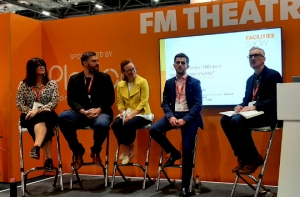
300 North was invited to the Facilities Show to discuss how recruiters could tackle skill gaps and shortages across the Facilities Management sector, how that would impact the industry going forward and what can be done to solve it. The panel, titled “Turbulent Times: FM’s Best Upskilling Opportunity?”, was chaired by Mark Whittaker (Chair, IWFM and General Manager, Thomson FM), and had Conrad Dinsmore (Head of Projects, CBRE), Sofie Hooper (Head of Policy, IWFM), Andrew Hulbert (Managing Director, Pareto FM) and Theresa Lamarque (Director of Strategic Partnerships, 300 North), as speakers.

300 North are delighted to have a guest blog from Joanne Turrell at Uptree for National Apprenticeship Week to share how they are helping to bring young people into the workplace skilled and confident to start work.
This National Apprenticeship Week, Uptree, the professional network championing diversity, inclusion and equality for all, discusses the benefits of entry-level apprenticeships for employers and the importance of widening participation.
2022 is shaping up to be another interesting year in recruitment for the FM sector. After the uncertainty of the last two years, many are hoping that 2022 will hold more stability for the market and that markets will move back into the growth phase after a period of re-stabilisation. At 300 North we have seen a general upturn in applications and expressions of interest in roles, as well as market data showing an increase in registrations to job boards in the last few months. This increase from people wishing to change roles will need to continue for some time before the candidate deficit is resolved and there are as many people looking for jobs as there are vacant positions, but it shows a move towards more normal levels.

It is clear for all to see that the recruitment market has been turned upside down over the past 2 years and candidate experience has changed significantly. The pandemic has caused people’s priorities to change sometimes drastically with individuals wanting to move roles but unsure of the current market. The recruitment market within FM has also gone through several changes. From locking down almost completely and only taking on critical staff in early 2020, to a more “buyer” led market where clients had their pick of candidates quickly looking for work, to now, where for the last several months job vacancies have been soaring and finding the right candidates has become much more challenging.

Comment from 300 North given to TwinFM for their recent article: Heat and Buildings Strategy – Experts Reveal How to Tackle the Skills Shortage. For further information on the government strategy and the skills shortage, please visit their site.
The government’s new Heat and Buildings Strategy is highly reliant upon the installation of heat pumps to replace the traditional natural gas boiler found in most UK buildings. To reach the current net zero targets there should be 600,000 heat pump installations per year by 2028, requiring an estimated workforce of 12,000+ trained heat pump installers.
In the strategy the government identifies the need for engaging with further education (FE) and industry bodies to create ambitious training and reskilling plans including new and updated qualifications in F-Gas and SRAC. The CITB reiterates the need for industry bodies to work alongside FE institutions to design courses and qualifications that identify and meet the needs of the sector long term, including maintenance work and upskilling as heat pumps evolve.
Critically, this growth in the sector is an opportunity for companies to diversify their workforce by bringing in people from underrepresented groups which will attract these companies to young people entering the workforce now and in the future. Additionally, companies who support the training and development of their current employees will benefit from employee retention, not to mention that “existing heating engineers can be upskilled to install heat pumps in one week or less”. Tackling this skills shortage will require a whole of sector approach, as well as pushing the government to keep to their long term targets in order to create a lasting solution.
300 North are the Facilities Management recruitment specialists providing permanent, temporary and interim solutions to the UK Facilities Management, Mechanical & Electrical and Construction sectors. Get in touch to find out how we can help you with your recruitment needs by visiting our website home page or calling us on 0113 336 5161.

What is Company Branding?
Standing out to candidates is all about ensuring that your company is visible among many others when someone outside of the business or the FM sector is looking for a new role.

Poor equality and diversity in any organisation has been shown to negatively affect the bottom line. Not only can poor diversity affect customer perception and lead to boycotts and negative press or social media [presence] around your brand, it can also put off potential hires, who don’t want to be seen to be working for a homogenous company. People see diverse workplaces as being safer and more welcoming for them, and as a place where they can fit in more readily.

FM is already paving the way for UK recovery in the jobs market, with vacancies in workplace relocation, workplace management, security and sustainability opening across the sector. Cleaning alone has seen a 14% increase in job postings. This flexibility in FM and the willingness to train new workers from outside of the sector means that they are set to remain at the forefront of the UK’s economic recovery.
In the current market, FM companies can work to employ talented new workers with a diverse range of skills gained from previous employment. Transferrable skills such as strategic planning, project management, leadership and adaptability are all vital in FM, and could be gained in a range of other roles. FM can also be a great starting point for young people coming out of education, and a drive to recruit the best of those would be beneficial to the sector in the short and long term.

300 North are delighted to provide this guest blog, written by Baskar Sundaram at Bacchu RAIN, market development and strategic research specialists for the built environment. We would like to thank Baskar and his team for providing these insights to our clients and candidates in the Facilities Management sector.